The Great Keyboard Caper: A Journey From Wet Lasagna to Solid Gold Madness
Ever found yourself staring at your keyboard, fingers poised over the keys, and thought, "Hmm... I wonder if this experience could be more?" More what, you ask? More expensive, obviously. More... keyboardy.
Welcome, fellow word-wrangler, to the rabbit hole. Today, we’re spelunking into the world of clack, thock, and pure, unadulterated financial questionable-decision-making, guided by the ever-so-slightly unhinged professionals from Mr. Who’s The Boss. Buckle up.
Chapter 1: In The Beginning, There Was Tube
Our story starts not with a bang, but with a sad, floppy whimper. For the princely sum of $2, you are not buying a keyboard. You are adopting a sad piece of silicone that vaguely remembers being a keyboard in a past life. It arrives, we are told, in a tube. A tube. Like a poster for a band that broke up in 1996. It has 11 keys on the bottom row, which is an affront to geometry, ergonomics, and common decency.
This, friends, is the membrane keyboard. Each key sits atop a little rubber dome, waiting for you to squash its dreams. Press down, the dome collapses, two metal contacts kiss, and a letter appears on your screen. It’s a miracle of modern science, if that science were conducted by a very depressed engineer.
The review? A generous 0.1/10. It’s a "functioning keyboard" in the same way a grocery list written in ketchup is a "functioning document." It gets the job done, but you feel a little sad for everyone involved.
Chapter 2: The Boxed Illusion & The Scissor Switcheroo
Move up to $10, and you graduate from "tube" to "box." A box with a name on it! This is the "I have a surface!" upgrade. It’s still mushy, it’s still sad, but at least you’re not feeling your desk’s existential dread through the keys. Score: A blistering 1/10. Progress!
At $30, we meet the scissor switch. Don't let the cool name fool you. It’s still a membrane keyboard, but now it has a little plastic X-shaped scaffold inside to give it a false sense of purpose. It’s the keyboard equivalent of putting a sporty spoiler on a 1998 Toyota Corolla. It also goes wireless, which our host claims is "very, very convenient," right before admitting he plugs his wireless keyboards in. We’ve entered the realm of the delightfully contradictory. This one scrapes a 2.5/10.
Chapter 3: The Gates of Mechanical Valhalla ($50)
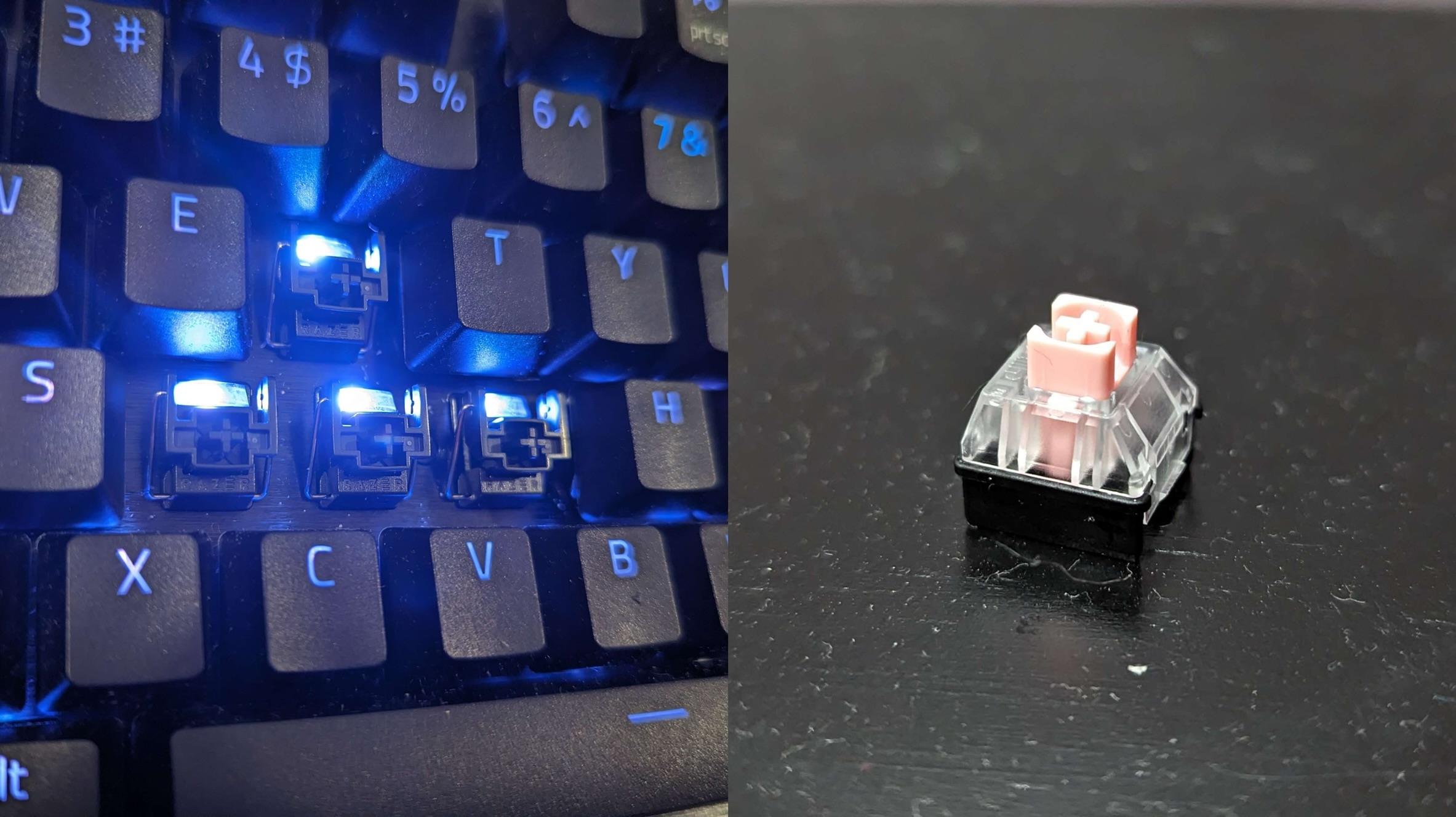
Here it is. The moment. For fifty American dollars, you are granted entry into the Mechanical Keyboard Club. No more sad rubber domes. Now, each key is a tiny, beautiful Rube Goldberg machine: a keycap, a stem, a spring, and two metal contacts waiting to be united by your forceful tap.
The difference is palpable. It’s consistent. It’s clicky (or clacky, or thocky—more on that later). You don't have to mash the key to the board's soul to register a press. It’s glorious. It also, in our entry-level model, rocks like a boat in a storm and has software you can’t make any bigger. We’re giving it a 3.5/10. It’s flawed, but it’s the first keyboard that makes you feel something besides regret.
Chapter 4: The Refinement Era ($100-$200)
Now we’re cooking. At around $100-$120, you leave the budget-brand switches (Outemu) for the smoother, more refined Gaterons. The board feels solid. It has stabilizers so big keys don’t wobble. It has sound-dampening foam and gaskets (tiny soft bits) to absorb vibrations. It feels… luxurious. It’s the keyboard you’d gift to someone to make them understand your new, expensive hobby. Rating: A very respectable 6.5/10.
But wait! There’s a fork in the road. For ~$200, you can enter the realm of Hall Effect switches. Forget metal contacts; these use magnets. MAGNETS! This means you can customize the actuation point—how far down you need to press for it to count. It’s for gamers who want every millisecond advantage, including a feature called "rapid trigger" so good it got banned in some circles. It’s a technological marvel. Our host also hates it. "For $200, you're getting a lot of function, but not a lot of keyboard. And I like keyboard." Rating: Also a 6.5/10. A tie! It’s not better or worse, just… different.
Chapter 5: Thin, Wild, and Everything In Between ($300-$500)
$300 gets you a low-profile mechanical keyboard. It’s thin, portable, and somehow still has that sweet mechanical feel. It’s like the love child of an Apple keyboard and a proper mechanical board. It earns a 6/10.
Then, at $350, we go fully off the rails with the FinalMouse Centerpiece Pro. This thing has a 2K resolution display under the keys. The letters float on screen and you can move them around if your viewing angle changes. It’s the stupidest, most incredible thing you’ll ever see. Our host’s review is poetry: "Having a keyboard that prioritizes looking at your keyboard is about the dumbest thing ever. The keyboard is a periphery device. If I make the periphery device the main device, why do I have a screen?" It gets a 5/10. Style points are infinite, sense points are zero.
$500, however, is where you master the basics. This is the "everything" board. Multiple layers of dampening, adjustable gaskets, premium switches, a tiny OLED screen, a wrist rest heavier than your first laptop, and an 8,000Hz polling rate (vs. the $10 board’s 100Hz). It’s a tank. It feels incredible. It’s what you buy when you’ve reached keyboard Nirvana and just want to polish the experience. Joint score: 8/10.
Chapter 6: The Wild West (& A Sneaky Sponsor)
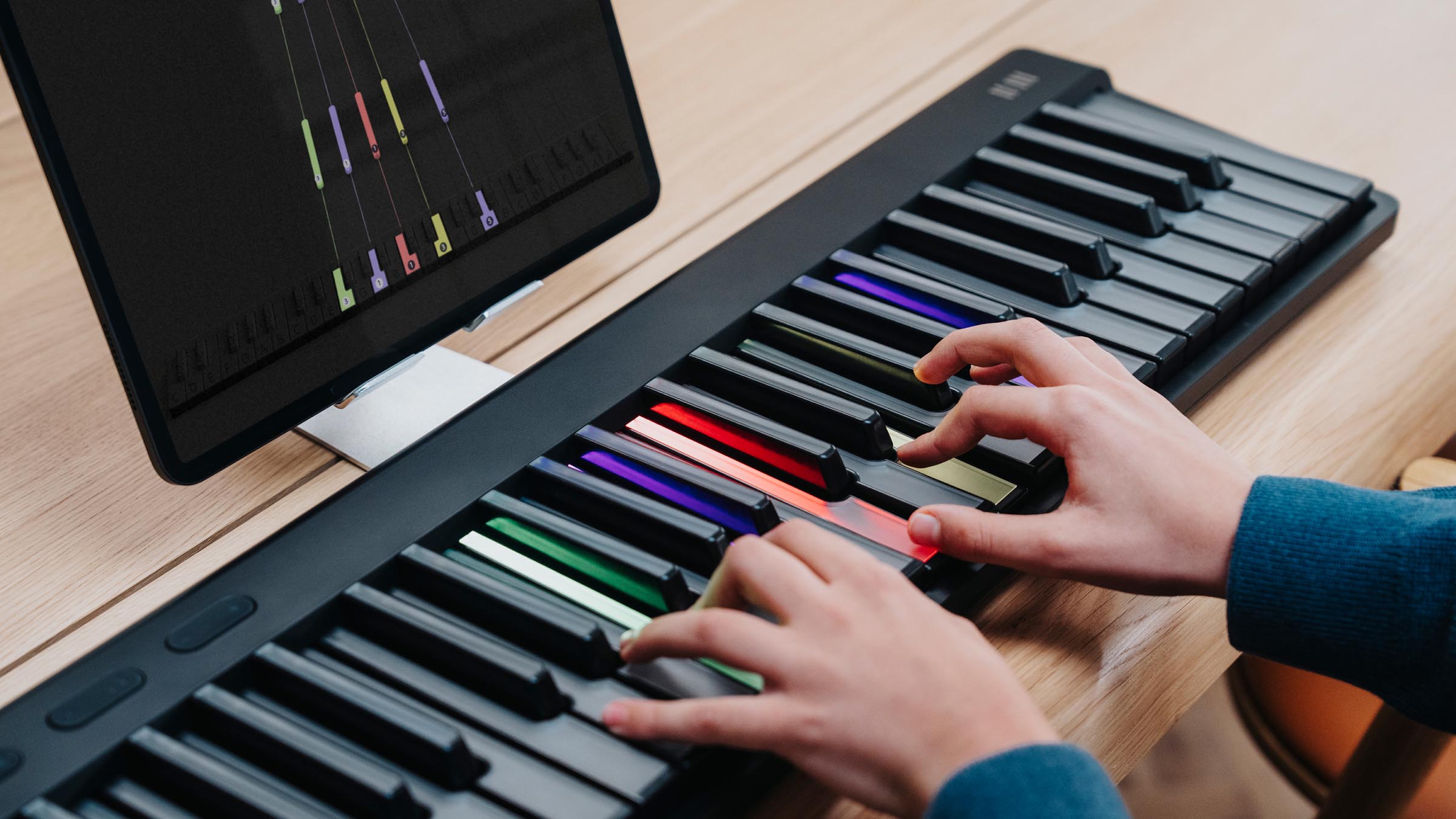
Before we go truly mad, a brief interlude for our $599 sponsor, the Roli Piano. It’s a keyboard that teaches you to play piano, complete with an app and infrared cameras that critique your finger technique. It’s cool! Our host tried to Rickroll his co-host with it and failed miserably. Moving on.
Chapter 7: The Land of Diminishing Returns ($725 - $2,000)
$725 gets you the Angry Miao Neon 80, a board with "4-dimensional RGB" and 389 LEDs. It’s a light show with keys attached. But, crucially, you can turn the lights off and still have a fantastic typing experience. It scores a strong 8.25/10.
$1,000 buys a custom, giant, one-of-a-kind Mr. Who’s The Boss edition keyboard with 200 keys including "super," "hyper," and "meta." It’s absurd. It’s glorious. It’s a 7/10.
$2,000? That gets you 24-karat gold and padauk wood. It smells… expensive. And not in a good way. The keycaps feel like a 50-cent afterthought slapped onto a bar of gold. It’s a flex, not a functional tool. Rating: A paltry 4.5/10. A lesson in misplaced priorities.
Chapter 8: The $20,000 Behemoth (Or, How to Lose a Bet)
Finally, we reach the peak. The summit. The $20,000 keyboard. How do you spend that much? You build a keyboard 27 times larger than normal. With custom, giant switches. It’s a monstrosity. A work of art. A conversation piece that requires its own zip code.
The review? "I prefer the $100 board… I also prefer the $50 board… You've named like half of them." It’s given a 4/10 (or a "12 out of 10," depending on who you ask in the moment). It’s incredible because it exists, not because you’d ever want to use it.
The Moral of the Story
So, what did we learn on this journey from tube to solid gold? * $50 gets you 90% of the way to typing bliss. * $100-$500 refines that bliss into something truly special. * Everything after that is about personal expression, niche features (Hall Effect for gaming), or sheer, unadulterated spectacle.
The best keyboard isn’t the most expensive one. It’s the one that makes you happy. Even if that keyboard is a $2 piece of wet lasagna that lives in a tube.
Views Disclaimer: The opinions, hot takes, and questionable scoring systems expressed in this post are based on the whimsical and highly entertaining views of the creator(s) in the original video. They are not necessarily my own (but I’m also suspicious of any keyboard that comes in a tube).